

Embedded software engineering sits at an unusual crossroads — part software, part hardware, part systems thinking. That mix is exactly why so many embedded engineers eventually ask whether their skills open doors beyond the role they started in, especially as they gain experience and start looking at what comes next in their career.
The short answer is yes, and the range of options is broader than most engineers expect. This guide walks through the adjacent roles an embedded software engineer can realistically move into, which skills carry over directly, and how to plan a transition without starting from zero.
Are There Adjacent Job Roles From an Embedded Software Engineer?
Yes. Embedded software engineers are well positioned to move into several adjacent roles, including firmware engineer, embedded systems engineer, embedded systems architect, hardware engineer, embedded test and validation engineer, IoT engineer, and robotics engineer. These transitions work because embedded engineers already combine low-level programming, hardware awareness, and systems-level debugging — the core skill set most adjacent roles are built around.
What Is an Embedded Software Engineer?

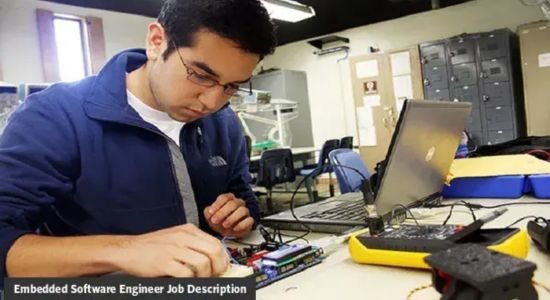
An embedded software engineer writes and maintains the software that runs directly on hardware — microcontrollers, sensors, and specialized devices — rather than general-purpose computers. This typically involves:
- Writing low-level code in C or C++ close to the hardware.
- Working with real-time operating systems (RTOS) or bare-metal environments.
- Interfacing directly with sensors, actuators, and communication protocols (I2C, SPI, UART, CAN).
- Debugging with oscilloscopes, logic analyzers, and hardware debuggers, not just software tools.
- Balancing strict constraints around memory, power consumption, and timing.
This combination of software depth and hardware fluency is precisely what makes embedded engineers valuable across several neighboring disciplines.
Top Adjacent Job Roles for Embedded Software Engineers
Firmware Engineer
Firmware engineering overlaps so heavily with embedded software that the two titles are sometimes used interchangeably. The role typically focuses more narrowly on the lowest-level code that controls a device — bootloaders, drivers, and hardware initialization — making it one of the most natural lateral moves available.
Embedded Systems Engineer
Where an embedded software engineer focuses on code, an embedded systems engineer takes a broader view of the entire product — hardware selection, software architecture, and how the two interact as a complete system. It’s a natural next step for engineers who enjoy thinking beyond just the codebase.
Embedded Systems Architect
This is a senior-level path focused on high-level design decisions: choosing microcontroller families, defining system architecture, and setting technical direction for a product line. It suits engineers who’ve spent years in embedded development and want to move into design leadership rather than pure implementation.
Hardware Engineer
Some embedded engineers move further toward hardware itself, taking on circuit design, PCB layout, and component selection. This path requires building out electronics knowledge beyond firmware, but the hardware-adjacent experience embedded engineers already have makes the learning curve shorter than for a typical software developer.
Embedded Test and Validation Engineer
This role focuses on verifying that embedded systems meet functional, safety, and performance requirements before release. It draws directly on an embedded engineer’s debugging instincts and hardware familiarity, applied to systematic test design instead of feature development.
IoT Engineer
IoT engineering extends embedded work into connected devices — adding networking protocols, cloud integration, and device management on top of the same low-level foundations. It’s a strong option for engineers who want to combine embedded skills with cloud and networking exposure.
Robotics Engineer
Robotics roles combine embedded software, control systems, and real-time processing to make physical systems move and respond to their environment. Embedded engineers already understand real-time constraints and hardware interfacing, which covers a meaningful part of what robotics work demands.
Skills That Transfer to Adjacent Roles
| Embedded Skill | Where It Transfers |
| C/C++ and low-level programming | Firmware, embedded systems, robotics |
| RTOS and real-time constraints | Embedded systems, robotics, IoT |
| Hardware debugging (JTAG, oscilloscopes) | Test and validation, hardware engineering |
| Communication protocols (I2C, SPI, CAN) | IoT engineering, hardware engineering |
| Power and memory optimization | Firmware, embedded systems architecture |
| Systems-level problem solving | Systems architecture, robotics |
These overlapping skills are exactly why lateral moves from embedded software engineering tend to be smoother than switching into an unrelated software discipline like front-end or data engineering.
How to Transition From an Embedded Software Engineer to Another Role
- Identify the gap, not just the title — compare your current skill set against the target role’s job postings to see what’s actually missing.
- Build targeted project experience — a small IoT project, a robotics side build, or a PCB design exercise demonstrates capability faster than certifications alone.
- Lean on internal mobility first — moving to an adjacent role within your current company is often faster than a fully external switch, since your hardware and product context already transfers.
- Get exposure to the adjacent toolchain — spend time with the specific tools each role expects (CAD/PCB software for hardware, test frameworks for validation, cloud platforms for IoT).
- Reframe your resume around transferable outcomes — emphasize systems thinking, hardware interfacing, and debugging depth rather than only listing embedded-specific tools.
Which Adjacent Career Path Is Right for You?
- Choose firmware engineering if you want to stay closest to your current day-to-day work with minimal transition friction.
- Choose embedded systems engineering or architecture if you’re drawn to bigger-picture design decisions over pure coding.
- Choose hardware engineering if you’re genuinely interested in circuits and physical design, not just software that talks to them.
- Choose test and validation if you enjoy rigor, systematic thinking, and catching issues before they reach production.
- Choose IoT engineering if you want to add networking and cloud skills to your existing embedded foundation.
- Choose robotics engineering if you’re motivated by systems that move, sense, and react in the physical world.
Frequently Asked Questions
What are adjacent job roles for an embedded software engineer?
Common adjacent roles include firmware engineer, embedded systems engineer, embedded systems architect, hardware engineer, embedded test and validation engineer, IoT engineer, and robotics engineer — all of which build on the same core mix of low-level programming and hardware awareness.
Can an embedded software engineer become a firmware engineer?
Yes, and this is often the most direct transition available, since the two roles already overlap heavily in day-to-day responsibilities like driver development and hardware initialization.
Is embedded systems engineering a good career?
Yes — it offers strong demand across industries like automotive, medical devices, and industrial automation, along with a clear path toward architecture or leadership roles as experience grows.
What skills are needed to switch to another embedded role?
The specific skills depend on the target role, but strengthening real-time systems knowledge, hardware debugging, communication protocols, and systems-level design thinking covers most adjacent transitions well.
Do adjacent embedded roles pay more than embedded software engineering?
It varies by role and industry rather than being a consistent jump. Architecture-level and specialized roles like robotics or IoT engineering often command higher pay as seniority increases, while roles like firmware or test engineering tend to sit close to embedded software engineer pay bands.
How long does it typically take to transition to an adjacent role?
Most engineers can move into a closely related role like firmware engineering within a few months through internal mobility, while roles requiring new toolchains — such as hardware design or robotics — often take six months to a year of targeted skill-building and project work.
Conclusion
Embedded software engineering isn’t a career dead end — it’s a foundation that opens into firmware, systems architecture, hardware design, testing, IoT, and robotics, each building on skills you’ve likely already developed. The clearest path forward is identifying which adjacent role matches your interests, closing the specific skill gap through targeted projects, and using your existing hardware and systems experience as leverage rather than starting over. With the right focus, the move into an adjacent role is far shorter than it looks from the outside.